The Operator Training Certificate in the United Kingdom is a recognised qualification designed to ensure that individuals operating plant, machinery, or specialist equipment are fully trained, competent, and compliant with current health and safety standards. Widely required across the construction, logistics, and industrial sectors, this certification confirms that an operator has the practical skills and technical knowledge necessary to perform their role safely and effectively.
Operator training in the UK is commonly delivered under accredited schemes such as the Construction Plant Competence Scheme (CPCS) and National Plant Operators Registration Scheme (NPORS). These schemes are recognised by employers nationwide and align with industry regulations and best practices.
What is an Operator Training Certificate?
An Operator Training Certificate is awarded to individuals who have successfully completed both theoretical and practical training for a specific category of machinery or equipment. This may include excavators, dumpers, telehandlers, cranes, forklifts, and other types of plant machinery.
The certificate serves as official proof that the holder has been assessed against nationally recognised standards and is competent to operate machinery in a professional environment. It is often a mandatory requirement for working on construction sites and other regulated workplaces.
Key Features of the Certification
1. Practical, Competence-Based Assessment
The training focuses on real-world operation of machinery, ensuring that candidates develop hands-on skills that meet workplace demands. Assessment typically includes both theory and practical tests.
2. Health and Safety Compliance
A core component of the training is adherence to UK health and safety legislation. Operators are trained to identify hazards, minimise risks, and operate equipment responsibly.
3. Industry Recognition
Certificates issued under CPCS or NPORS are widely accepted across the UK, making them highly valuable for employment and site access.
4. Category-Specific Qualification
Operator training is specific to each type of machinery. Candidates must be certified for each category they intend to operate, ensuring specialised competence.
Types of Operator Training
Operator training certificates are available across a wide range of machinery categories, including:
Excavators (tracked and wheeled)
Forward tipping dumpers
Ride-on rollers
Telescopic handlers (telehandlers)
Cranes and lifting equipment
Forklift trucks
Slinger/signaller operations
Each course is tailored to the complexity of the equipment and the experience level of the candidate.
Who Should Obtain This Certificate?
Operator training certification is essential for:
Individuals entering the construction or plant operation industry
Workers required to operate machinery on-site
Experienced operators seeking formal certification
Employers aiming to ensure workforce compliance and safety
Whether you are a beginner or an experienced professional, this qualification provides the necessary validation of your operational skills.
Assessment and Certification Process
To achieve an operator training certificate, candidates must complete a structured training programme delivered by an accredited provider. The process typically includes:
Classroom-based theory sessions
Practical hands-on training
Health and safety instruction
Theory test (written or computer-based)
Practical assessment on machinery
Upon successful completion, candidates are issued with a certificate and, where applicable, a recognised operator card such as a CPCS Red Trained Operator Card.
Benefits of an Operator Training Certificate
Improved Employability
Certified operators are in high demand across construction and industrial sectors, increasing job opportunities and earning potential.
Workplace Safety
Proper training reduces the risk of accidents and ensures compliance with legal safety requirements.
Professional Credibility
Holding a recognised certificate demonstrates competence and professionalism to employers and clients.
Career Progression
Operators can advance to higher-level roles, including supervisory and specialist positions, by gaining additional certifications.
Importance in the UK Workforce
The UK places strong emphasis on health, safety, and competence within high-risk industries. Operator training certificates play a critical role in maintaining these standards by ensuring that all machinery operators are properly trained and assessed. Employers rely on these certifications to meet regulatory obligations and maintain safe working environments.
Conclusion
An Operator Training Certificate in the UK is an essential qualification for anyone involved in the operation of plant and machinery. It provides formal recognition of skills, ensures compliance with industry standards, and enhances career prospects within a competitive job market.
For further information on available courses, certification categories, or enrolment options, prospective candidates are encouraged to contact our team. Professional guidance is available to help you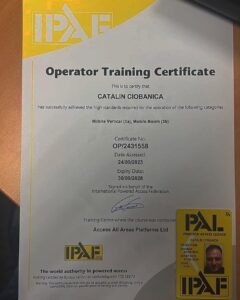 select the right training programme and achieve your certification with confidence and efficiency.